
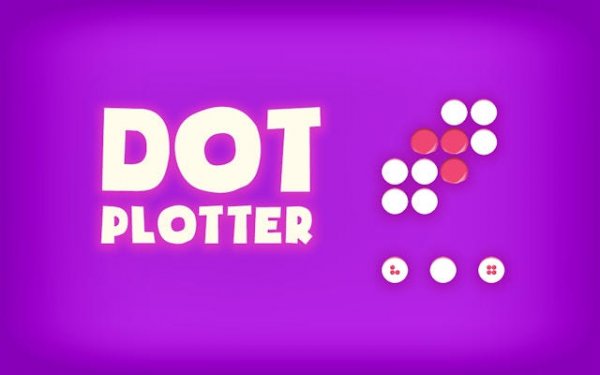
Route-Building on a Dot Grid
Grid Path Logic Challenge is built around a single, clear objective: cover every dot on the board with one unbroken line. Players first scan the layout, then tap or click a starting dot to begin. From there, each move extends the path to an adjacent dot. The puzzle is solved only when all dots are included and no move has been skipped or misdirected. There is no timer or score pressure—the challenge comes entirely from sequencing and spatial planning.
How the Boards Get Harder
Early puzzles use small grids with few dots, so new players can learn the movement rules without much friction. As you progress, boards expand and dot arrangements become more complex. Some layouts cannot be solved from an obvious starting point; they require backtracking or beginning from a different dot entirely. This difficulty curve is gradual, and the game expects repeated attempts when a solution is not immediately clear. Each puzzle is self-contained, so a difficult board does not lock you out of easier ones.
Interface and Platform Behavior
The visual design stays deliberately plain: a neutral background, clearly marked dots, and no animated distractions or intrusive menus. Controls are limited to tap or click, which makes the same build work on phones, tablets, and desktop browsers. No installation or account creation is required, and the game does not collect personal data. That combination suits short breaks as well as longer solving sessions, because there is nothing to set up and nothing to lose by stepping away.
Approaches That Tend to Work
Scanning the whole grid before placing the first move often exposes the intended sequence. If a layout resists your initial route, switching the starting dot can open a path that was not visible from the original choice. Because every puzzle has at least one valid solution, persistence and careful thinking matter more than speed. Regular play builds pattern recognition, and the skills transfer naturally from one board to the next.






Editorial Notes