
Controlling Two Spheres at Once
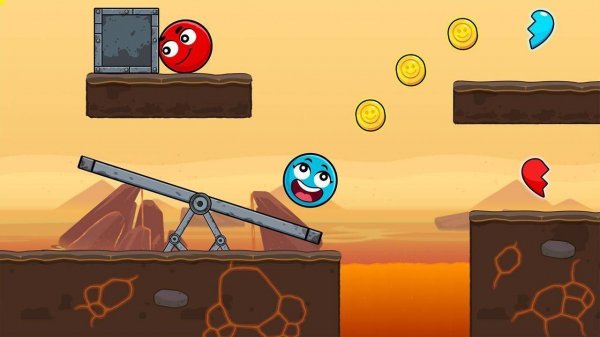
Dual Sphere Puzzle Adventure centers on a single, demanding idea: you control two characters simultaneously, each represented by a colored sphere. The red sphere and blue sphere travel separate paths that often cross or require actions at the same moment. On-screen buttons move each sphere independently, letting them roll forward, leap over gaps, or bounce off surfaces. Because both characters must be managed together, many obstacles depend on precise timing from both sides. This dual-control system creates a cooperative feel even when only one person is playing, and it rewards planning over quick reflexes.
How Levels Build Complexity
Each stage arranges platforms, gaps, and interactive elements in a new configuration. Some obstacles require one sphere to activate a switch that opens a path for the other. Others feature moving platforms that demand coordinated jumps. Special items placed throughout levels can temporarily boost a sphere's movement or remove barriers. The layout grows more complex gradually, introducing new puzzle elements without overwhelming the player. Early stages focus on basic coordination, while later ones combine multiple mechanics that require careful observation and route planning.
Visual Style and Family-Friendly Design
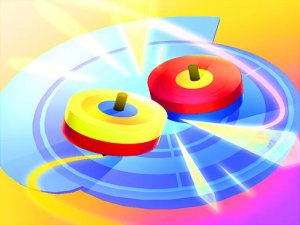
The game uses bright, saturated colors and simple geometric shapes. Backgrounds feature soft gradients and gentle animations that keep attention on the puzzle action. Character designs are minimal but expressive, with each sphere having a distinct appearance that makes them easy to track during play. The clean aesthetic avoids clutter so obstacles and goals remain clearly visible. This visual approach supports the game's family-friendly nature, making it suitable for younger players while remaining appealing to adults.
Progression and Difficulty Curve
Levels are organized into groups that introduce new concepts gradually. Early puzzles teach basic movement and coordination, while later ones require thinking several steps ahead. Difficulty increases through the combination of existing mechanics rather than sudden spikes. Players who struggle can replay any completed level to improve their coordination. There is no time pressure, allowing for thoughtful experimentation. This design encourages learning through practice, making the game accessible to beginners while still offering satisfying challenges for experienced puzzle fans.


Editorial Notes