
Two-Player Combat Basics
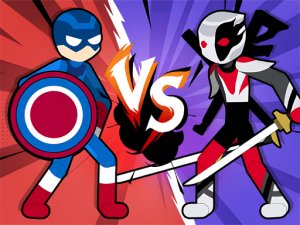
Buddy Team Action Quest is built around a single premise: two players, one screen, and a steady stream of red opponents. Each player controls a character with a keyboard or controller. You run to avoid incoming attacks, jump to clear obstacles or reach higher platforms, and press specific button sequences to trigger combos. The controls are easy to pick up, but the combo timing gives the game a skill ceiling worth climbing.
Why Coordination Matters
The game does not reward solo heroics. Opponents come in waves, and the most efficient way through each level is to combine your moves with your partner's. One player drawing attention while the other lines up a combo is a simple example of the strategic coordination the game expects. Because both characters share the same screen, communication is not optional. You need to call out attacks, plan routes, and agree on when to push forward or fall back.
Campaign Structure and Final Challenge
A campaign mode provides structured progression through multiple levels. Each stage introduces the same core loop—run, jump, combo, coordinate—but the final opponent is the real test. That fight checks whether you and your partner have actually learned to read each other's timing rather than just mashing buttons. Defeating the final opponent is the campaign's win condition.
Sound and Atmosphere
Sound effects are used to reinforce the action, giving audio feedback for hits, combos, and opponent movements. That feedback matters in a cooperative game where both players need to react quickly. The overall presentation stays family-friendly, which makes the game suitable for players of various ages who want a shared challenge rather than a solo grind.






Editorial Notes