
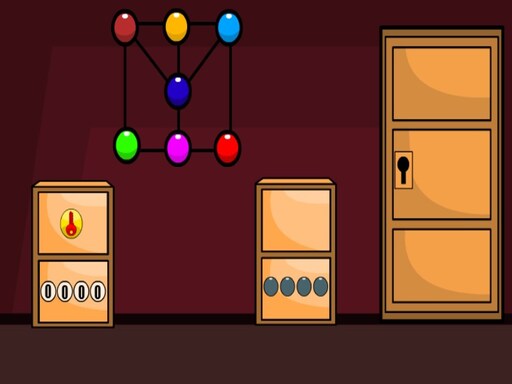
A Room Defined by Its Color
Maroon Room Escape Puzzle builds its identity around a single visual constraint: the entire room is rendered in a maroon color scheme. That choice affects how you scan the environment. Objects and clues do not pop against a busy background; instead, they blend into a narrow palette, so progress depends on noticing small differences in shape, shadow, and placement rather than spotting bright highlights. The result is a calmer, more deliberate kind of observation than many escape games offer.
Click, Collect, Combine
Interaction is handled entirely through mouse or touch input. You click on objects to examine them, pick up items that can be carried, and then apply those items to other objects in the room. A found key might fit a drawer; a tool might open a panel. The game does not rush you toward a conclusion—there is no countdown and no penalty for experimenting. Each successful combination triggers an event that moves you closer to the door.
Puzzle Logic and Hidden Objects
The puzzles lean on logic and observation rather than reflexes. Hidden objects are scattered throughout the room, and each one serves a purpose in the escape chain. Because the game avoids time pressure, you can revisit the same corner repeatedly and still catch something you missed. That design rewards patience, but it also means the challenge comes from attention to detail, not from speed or dexterity.
Who This Suits
Players who enjoy point-and-click adventures and casual puzzle games will find the controls immediately familiar. The absence of a timer makes it approachable for younger players or anyone who prefers a low-stress session. If you dislike pixel-hunting or want fast-paced action, the slow, methodical pace may not hold your attention. Otherwise, the game delivers a focused mental workout with a clear, satisfying goal: unlock the door and get out.








Editorial Notes