
Survival in a Single Life
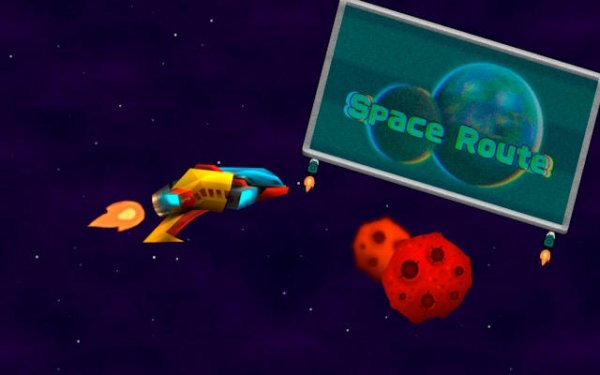
Cosmic Drift: Hazard Course strips the flight formula down to one rule: keep moving forward without touching anything. A dense field of drifting rocks and metallic wreckage fills the route, and any contact immediately ends the current run. There are no shields, no health bars, and no second chances within a single attempt. That harsh failure condition is the source of the game's tension — every second of survival is earned through clean movement rather than resource management. Because resets are fast, the loop stays tight: crash, restart, adjust, try again.
Procedural Obstacle Layouts
Each run generates a fresh sequence of obstacles. The arrangement of rocks, wreckage, and narrow gaps changes every time, so memorizing a fixed route is not an option. Players must read the environment in real time and commit to split-second decisions. As a run continues, the layout introduces tighter corridors and faster-moving debris, which keeps the challenge from flattening out after repeated attempts. The result is a game that rewards reaction speed and spatial awareness over route knowledge.
Controls and Momentum
The spacecraft responds to simple input commands, whether through keyboard keys or mouse movement. The controls translate intent directly into on-screen motion, but the ship carries momentum through the void. Smooth, incremental adjustments work better than sharp turns, especially when threading narrow gaps. Mastering that gentle control scheme becomes essential as obstacle patterns grow more complex later in a run. Players who fight the momentum will clip debris; players who work with it will find cleaner lines.
Visual Clarity as a Design Choice
The game uses a bright, colorful space setting with a clean visual style. Stars twinkle in the background, and debris fields are rendered with clear outlines that make gaps easy to identify. That clarity is not just aesthetic — it serves fast decision-making, letting players distinguish safe passageways from solid obstacles at a glance. The presentation avoids violent imagery and disturbing content, keeping the focus entirely on movement and reaction.
Progression Through Personal Best
There is no traditional level system or unlockable content. Progression comes from the player's own improvement: beating a previous distance record or survival time. Procedural generation ensures no two attempts feel identical, which naturally extends replay value. Players who enjoy chasing high scores or refining reaction times will find a satisfying loop here. The game respects short sessions as well as longer periods of focused play, since every run starts immediately and ends without ceremony.



Editorial Notes