
Core Gameplay Loop
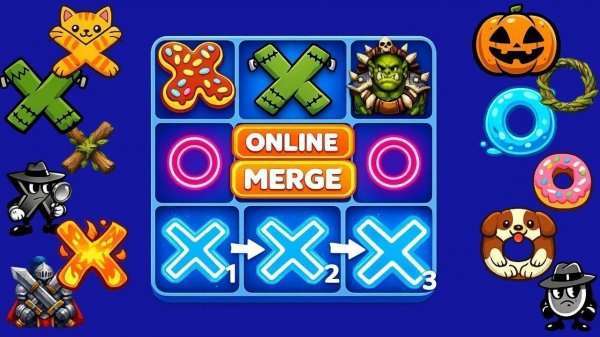
Triple Line Merge operates on a simple grid where two players take turns placing tokens. Every new token starts at its base strength. By positioning two tokens of equal strength next to each other, they combine into a single, more powerful token. This merging process is central to gaining an advantage, as stronger tokens can capture weaker opponent tokens placed in adjacent squares. The match ends when one player successfully aligns three of their tokens in a row, or when the grid is completely filled.
Capturing and Chain Reactions
When you place a token next to an opponent's token that has a lower strength level, you capture it and remove it from the board. This capture mechanic adds a tactical layer, forcing players to consider not only their own formations but also the vulnerability of their pieces. A chain reaction occurs when three tokens of the same strength align horizontally, vertically, or diagonally. They automatically merge into a single, stronger token, potentially creating new capture opportunities or clearing space on the grid.
Strategic Depth for All Ages
Despite its simple rules, Triple Line Merge offers considerable strategic depth. Players must balance the urge to merge tokens with the need to block their opponent from forming a line. Early game decisions about where to place base-level tokens can have ripple effects as the board fills. The game rewards players who think several moves ahead, anticipating how merges and captures will reshape the playing field. This makes it suitable for both casual family play and more competitive sessions.
Visual and Accessibility Design
The game presents a clean, uncluttered visual style that makes it easy to distinguish token levels and ownership. Color-coded tokens and clear grid lines ensure that players can quickly assess the board state. The interface is designed for intuitive touch or mouse input, with no complex menus or tutorials required. This focus on clarity helps players of all ages and experience levels jump into a match without confusion.
Player Comments
0 comments