
Wave Physics and Course Design
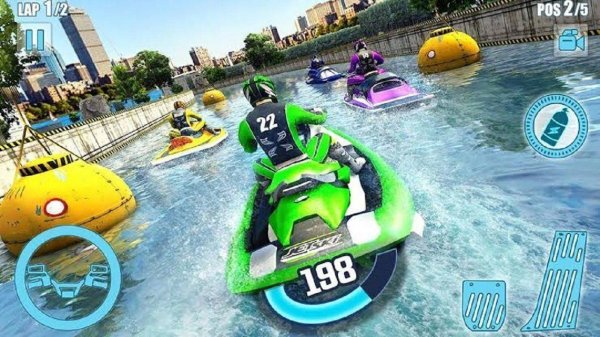
The water in Aqua Racer: Wave Runner 3D behaves like a moving surface rather than a flat track. Simulated wave patterns lift and drop the craft, changing how it grips and turns. Cresting a wave at the wrong angle costs momentum or sends the vehicle into a spin, so players learn to read the water and adjust throttle and steering before each rise. Courses use buoys, floating obstacles, and narrow channels to force precise lines. Because conditions shift during a race, the fastest route on lap one may not work on lap three.
Watercraft Choices and Upgrades
Before each race, players pick from a lineup of watercraft with different acceleration, top speed, and turning radius. Early options include nimble jet skis suited to tight spaces, while later unlocks add speedboats built for straight-line runs. Credits earned from missions and race finishes unlock new vehicles. No single craft dominates every track; a responsive jet ski may beat a fast boat on a technical course, which encourages players to experiment rather than settle on one favorite.
Mission Structure and Progression
Races are grouped into missions that introduce challenges step by step. Some ask players to hit checkpoints within a time limit; others require finishing ahead of a set number of opponents. Later missions combine these goals with rougher water and tighter layouts. This pacing gives each session a clear short-term target while building toward bigger milestones, such as unlocking the next tier of watercraft. Completed tracks remain open, so faster vehicles can be used to chase better lap times.
Controls and Feedback
Controls are built to feel immediate without being twitchy. Touchscreen players can tilt their device or use on-screen buttons, while keyboard users get dedicated keys for acceleration, braking, and steering. Spray effects and engine pitch changes act as cues for speed and traction, helping players judge when a turn is too sharp or when full throttle is safe. The interface stays minimal, keeping attention on the water ahead.






Editorial Notes